
Why natural insect repellents?
Chemical insecticides are effective, but often harmful to the environment, pets, and even crops. Fortunately, there are organic alternatives that can be easily made at home. These are not only safer, but also cost-effective and sustainable.
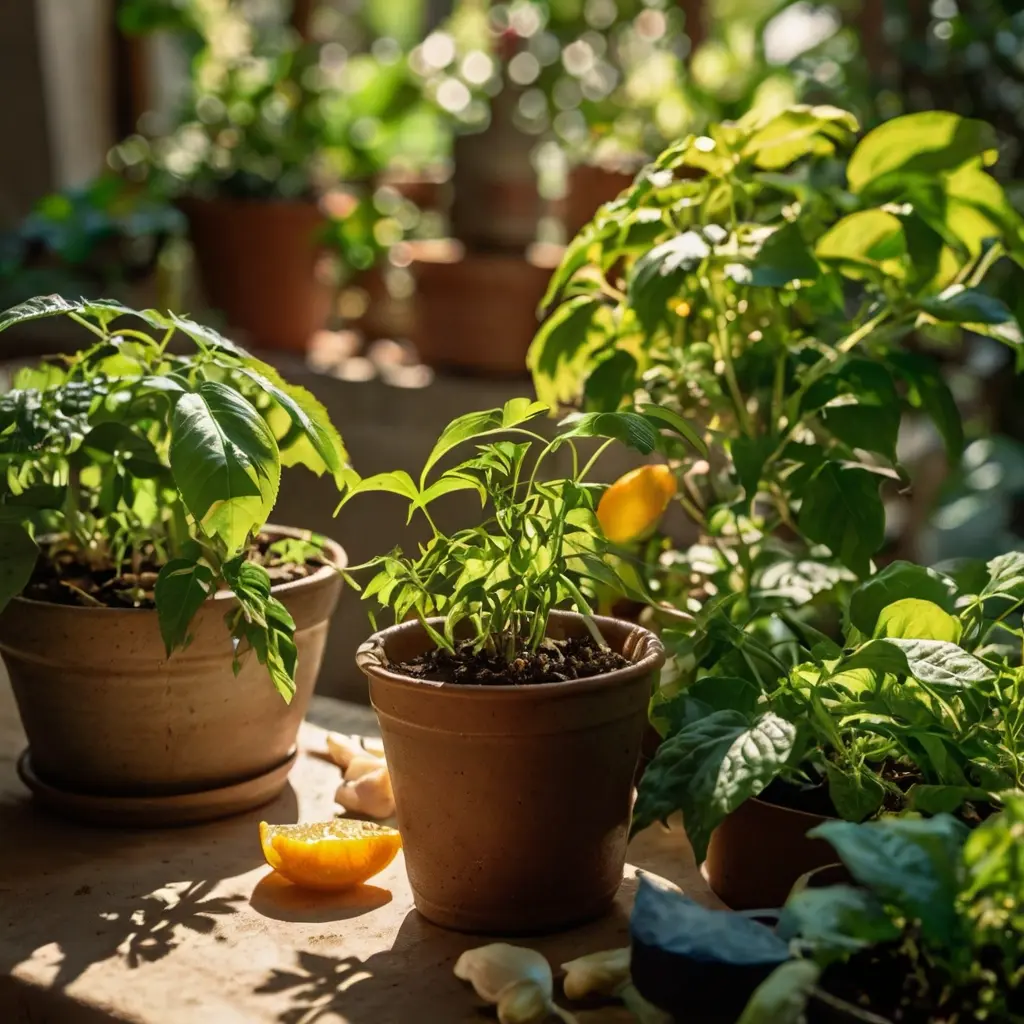
1. Essential Oils: The Power of Nature
Assumption Check: Many people assume that essential oils are only suitable for aromatherapy. But their effectiveness against insects is scientifically proven!
Recipe: Citrus Neem Spray
10 drops of neem oil
5 drops of lemongrass oil
500 ml water
Application: Spray the mixture on leaves and soil. Effective against aphids and spider mites.
Counterarguments: Some oils can burn plants in direct sunlight. Always test on a small area first!
2. Garlic & Chili: Spicy Defense
Logic test: Garlic contains sulfur compounds that deter insects – but does this also work against severe infestations?
Recipe: Spicy Broth
3 crushed garlic cloves
2 tsp chili powder
1 liter of boiling water
Anwendung: Abkühlen lassen und alle 3 Tage sprühen. Ideal gegen Weiße Fliegen.
Alternative perspective: For persistent pests like Colorado potato beetles, this may not be sufficient. A combination with mechanical traps may be necessary.
3. Use beneficial insects
Assumption Check: Not all insects are harmful! Ladybugs and lacewing larvae eat aphids.
Tip: Plant lavender or dill to attract beneficial insects.
4. Mechanical barriers
Nets or copper bands keep out snails and flying insects.
Warning: Nets must be checked regularly for damage!
Conclusion: Sustainability meets effectiveness
Natural insect repellents often require more patience than chemicals, but they protect the ecosystem. Experiment with the recipes and find your optimal blend!
Source: https://www.royalqueenseeds.de/blog-hausmachene-natuerliche-insektenschutzmittel-um-schaedlinge-abzuwehren-n1245