
Cannabis is far more than just a plant; it is a complex organism with unique biological characteristics that contribute to its diverse effects and uses. To understand how cannabis grows, develops and produces its active compounds, it is crucial to know the anatomy and life cycle of the plant. In this article, based on the Trinity of Modern Cultivation handbook by Treez Tools, we look at the science behind the cannabis plant and its key structures and growth stages.
Anatomy of the cannabis plant
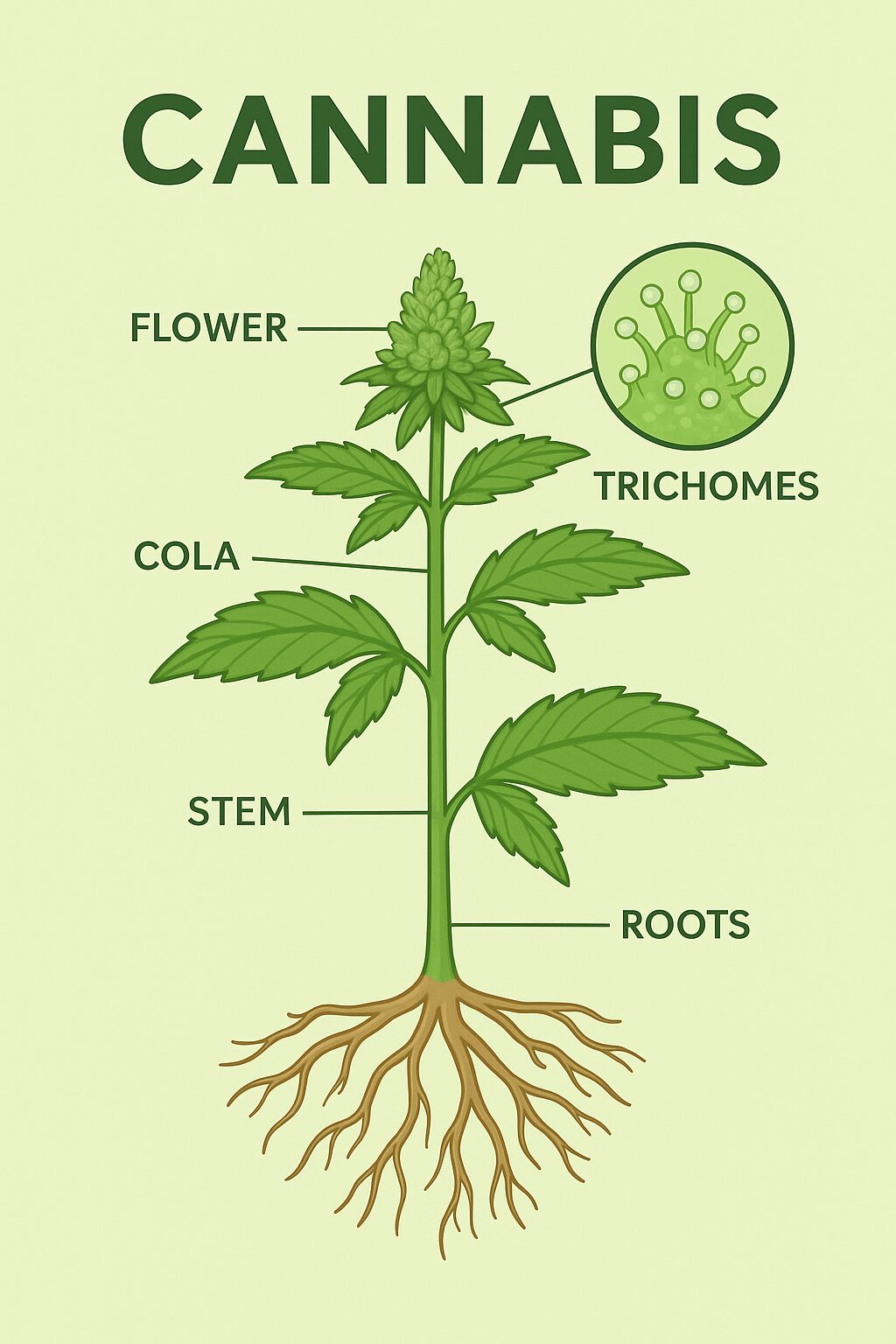
The cannabis plant consists of different parts, all of which play an important role in its growth and function:
Roots: The root system is the foundation of the plant and absorbs water and nutrients from the soil. Healthy roots are crucial for strong growth, as they transport vital elements to the rest of the plant. The roots also anchor the plant in the soil and give it stability.
Stem: The stem serves as the plant’s central support system and transports water and nutrients from the roots to the leaves and flowers. It also stores energy in the form of starch, which can be used during periods of stress or when there is a lack of light.
Leaves: The iconic, serrated leaves of cannabis are responsible for photosynthesis – the process by which sunlight is converted into energy. They also help to regulate water loss through transpiration.
Flowers (buds): The flowers, or buds, are the most important part of the female cannabis plant. They produce cannabinoids (such as THC and CBD) and terpenes, which are responsible for the aroma and effect of the plant. Sticky trichomes develop on the flowers, where the valuable compounds are produced and stored.
Trichomes: These small glandular structures on the flowers and leaves of the plant produce cannabinoids and terpenes. The concentration of trichomes is an indicator of the plant’s potency.
The life cycle of the cannabis plant
Understanding the life cycle of the cannabis plant is crucial to successful cultivation. According to the Trinity of Modern Cultivation manual by Treez Tools, the plant goes through several stages, each with different requirements for light, nutrients and care.
Germination: Germination is the first stage in the life of a cannabis plant. The seed is exposed to moisture and heat, causing it to germinate. The root breaks through the seed coat and marks the beginning of growth.
Seedling phase: After germination, the plant enters the seedling phase. This is when the first leaves (cotyledons) and the first true leaves develop. During this phase, it is important to closely monitor the humidity and light, as the plant is very sensitive.
Vegetative phase: In this phase, the plant concentrates on the growth of roots, stems and leaves. This phase is crucial for the development of a stable structure that supports flower formation. In the vegetative phase, the plant needs plenty of light and nitrogen-rich nutrients.
Flowering phase: In this phase, the plant produces flowers. This process is triggered by a change in the light cycle (typically 12 hours of light/12 hours of darkness). The plant concentrates its energy on the formation of flowers, which are rich in cannabinoids and terpenes.
Harvest: As soon as the plant has reached full maturity, it is time to harvest. Growers look at the color of the trichomes and pistils to determine the optimal harvest time. After cutting, the buds are dried and cured to improve flavor, aroma and potency.
Conclusion
The cannabis plant is a biological marvel with a clearly defined anatomy and a unique life cycle. Each stage of its growth is crucial for the production of valuable cannabinoids and terpenes. Understanding the science behind cannabis is essential for any grower looking to maximize yields and potency. As described in the Trinity of Modern Cultivation handbook, by understanding the biology of the plant and its stages of growth, growers can optimize their cultivation methods and produce high-quality cannabis products.